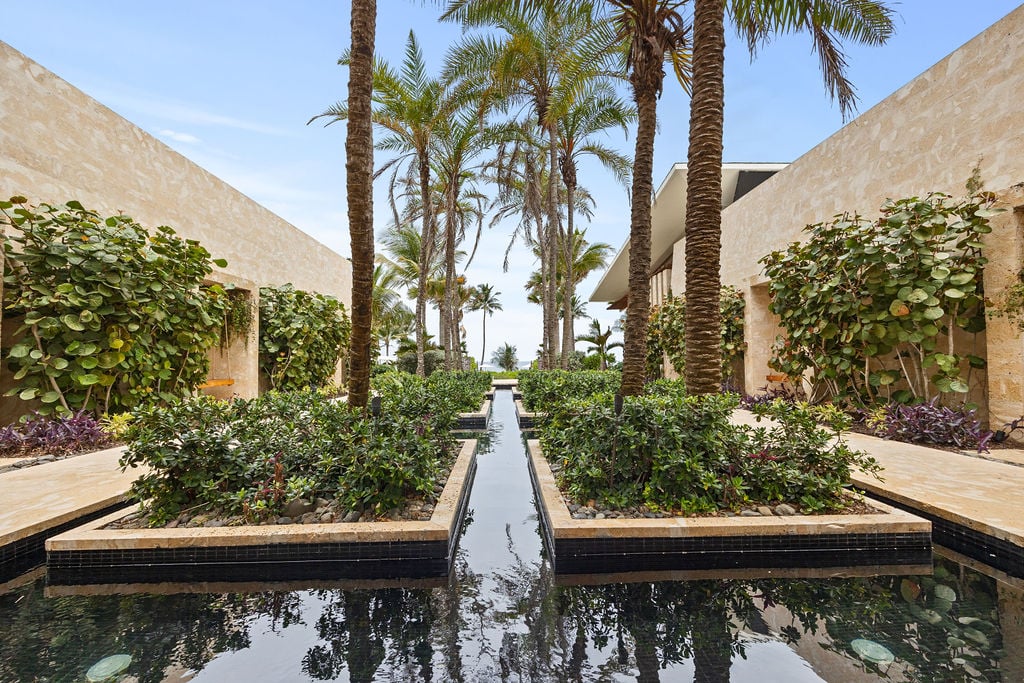
Puerto Rico’s Next Luxury Real Estate Chapter: From Tax-Driven Migration to Global Second-Home Destination
How evolving buyer profiles, international investment and limited coastal inventory could shape the next phase of Puerto Rico’s luxury real estate market.
For more than a decade, Puerto Rico’s luxury real estate market has evolved alongside one of the island’s most significant economic transformations.
What began largely as a tax-driven migration story has expanded into something considerably broader: a growing luxury ecosystem supported by international wealth, institutional investment, destination development, high-end hospitality and an increasingly sophisticated residential market.
The next chapter could be even more significant.
Puerto Rico is beginning to attract a buyer who may have no intention of becoming a full-time resident. Instead, these buyers are evaluating the island in much the same way affluent international purchasers have historically approached destinations such as St. Barts, Casa de Campo and Cap Cana: as places to own exceptional second or third homes, spend meaningful time with family and friends, enjoy privacy and hospitality, and diversify a global real estate portfolio.
This distinction could have important implications for the island’s luxury market.
1. From Tax Incentive to Global Luxury Destination
Act 60 has played a significant role in Puerto Rico’s modern wealth migration story.
For years, the conversation surrounding Puerto Rico and high-net-worth individuals centered on tax incentives. These programs attracted capital, entrepreneurs, investors, family offices and business owners to the island, contributing to a new layer of demand for luxury housing.
Today, however, the market is developing beyond that initial narrative.
Puerto Rico offers a combination of U.S. connectivity, sophisticated luxury communities, high-end hospitality and exceptional natural beauty. Together with limited beachfront inventory and an increasingly diversified luxury real estate market, these characteristics support the potential for demand beyond tax-driven residency.
Tax policy may remain an important consideration for some buyers, but it does not have to define the entire market.
The broader opportunity is to establish Puerto Rico as a destination that attracts buyers because of the lifestyle, residential experience and long-term appeal it offers.
2. The Act 60 Runway and Long-Term Investment
The extension of Puerto Rico’s incentive framework provides an important element of long-term visibility for investors and developers. Recent legislation extends the program’s statutory horizon into the 2050s, creating a longer planning horizon for qualifying participants.
For developers, family offices and high-net-worth investors, policy visibility matters because luxury real estate is inherently a long-duration asset.
A resort community can take years to entitle, develop, sell and mature. A residential estate may be held for generations. Institutional investors must consider not only current market conditions, but also the regulatory environment in which their investments may operate over the coming decades.
The upcoming transition in capital-gains tax treatment for future applicants also establishes an important distinction between the pre-2027 and post-2026 frameworks. This has heightened investor interest in evaluating residency options and the potential benefits of entering the existing framework before the transition takes effect.
Yet the broader question for Puerto Rico’s luxury real estate market extends beyond tax incentives: what happens as the island's wealth migration cycle matures and its appeal reaches buyers with different motivations?
3. The Next Buyer May Not Live in Puerto Rico Full Time
One of the most consequential potential developments in Puerto Rico’s luxury market is the emergence of buyers whose primary objective is property ownership rather than full-time relocation.
The traditional Act 60 buyer often approached the island with a clear objective:
Establish residency in Puerto Rico.
An emerging ultra-high-net-worth buyer may have a different objective:
Own a home in Puerto Rico.
That distinction does not necessarily imply permanent residency.
A buyer may acquire a $10 million to $30 million property in Dorado while maintaining residences in New York, Miami, California, Europe or elsewhere. The Puerto Rico property becomes part of a broader lifestyle and real estate portfolio.
This model is well established in international luxury destinations.
In St. Barts, for example, buyers have historically acquired exceptional residences for seasonal use, privacy and access to a distinctive island lifestyle, rather than to establish their primary residence there.
A similar model exists in the Dominican Republic's Casa de Campo and Cap Cana, where resort amenities, residential communities and coastal settings attract buyers seeking a second-home experience.
Puerto Rico possesses many of the characteristics needed to cultivate a comparable market, alongside a significant differentiator: its relationship with the United States.
4. From Tax-Driven Demand to Lifestyle-Driven Demand
The motivations behind a property purchase influence what a buyer values.
Someone relocating primarily for tax reasons may place considerable emphasis on residency requirements, income treatment and compliance. A global second-home buyer typically evaluates a wider range of considerations.
These may include:
- Privacy and security
- Beach access and waterfront positioning
- Architecture and design
- Hospitality and property management
- Golf and private-club amenities
- Marinas and boating access
- Restaurants, wellness and cultural experiences
- Family activities and quality of life
- International air connectivity
- Property scarcity and long-term desirability
This represents a broader purchasing framework, with the potential to support demand across multiple segments of the luxury market.
For Puerto Rico, the opportunity is to create an ownership experience that remains compelling regardless of whether a buyer chooses to establish tax residency on the island.
5. Dorado Beach: Establishing Puerto Rico’s Luxury Benchmark
Few communities illustrate the evolution of Puerto Rico’s luxury residential market more clearly than Dorado Beach.
The Ritz-Carlton Reserve community has become a defining reference point for the island's highest-end residential offerings, with exceptional properties reaching into the tens of millions of dollars.
The significance extends beyond the asking price or sale price of any individual residence. High-value transactions help establish market reference points for land, construction, architecture, amenities and scarcity.
Dorado Beach increasingly competes for attention with established luxury destinations throughout the Caribbean and beyond, rather than solely with other residential communities in Puerto Rico.
Its combination of branded hospitality, resort amenities, established residential infrastructure and high-value properties positions it as an important benchmark for the island.
The continued emergence of ultra-premium inventory, including beachfront estates and branded residences, also raises broader questions about how far Puerto Rico's luxury market can develop.
The market's long-term trajectory will depend on buyer demand, available inventory, transaction activity and the continued quality of the residential experience.
6. Beyond Dorado: Puerto Rico’s Expanding Luxury Landscape
For years, Puerto Rico's luxury real estate market was concentrated in a relatively small number of established locations. New investment and destination development are creating the potential for a more geographically diverse luxury ecosystem.
Moncayo — Eastern Puerto Rico
The Moncayo development in the Ceiba and Fajardo region represents an effort to establish a new luxury destination centered on sustainability, hospitality, residential development and the natural landscape of Puerto Rico's eastern coast.
Its location also provides a connection to the region's boating and yachting opportunities, which may appeal to buyers seeking a coastal lifestyle beyond the island's established luxury communities.
Esencia — Western Puerto Rico
On the western side of the island, Esencia represents another significant development initiative. Backed by Three Rules Capital and the Reuben Brothers, the project is designed around luxury hospitality, residential estates, wellness and the natural landscape of Cabo Rojo.
Beyond the individual development, its significance lies in the potential to broaden Puerto Rico's luxury destination offering and attract international buyers who might otherwise focus on more established Caribbean markets.
San Juan and Condado
The metropolitan luxury market offers a distinct alternative to resort-oriented residential communities.
San Juan and Condado provide access to restaurants, culture, nightlife, healthcare, business infrastructure and international travel. Luxury residential developments and the evolution of the waterfront continue to shape the metropolitan area's appeal to buyers seeking a more urban lifestyle.
Together, these markets demonstrate that Puerto Rico's luxury residential landscape is not defined by a single community or property type. Different locations serve different lifestyles and buyer priorities.
7. Why Scarcity Could Become Increasingly Important
One of Puerto Rico's potential long-term advantages is a characteristic that cannot easily be replicated: scarcity.
The supply of beachfront land is inherently limited. Large oceanfront parcels are finite, and opportunities within established resort communities are constrained by their existing boundaries and development patterns.
There are also relatively few locations where buyers can combine privacy, security, hospitality, golf, beach access and convenient connections to an international airport.
As demand for exceptional second homes evolves, properties that offer several of these attributes may become increasingly difficult to replace.
This does not guarantee appreciation or investment performance. Property values remain subject to market conditions, carrying costs, maintenance, insurance, liquidity and buyer demand.
Nevertheless, the limited supply of truly exceptional coastal properties is an important consideration when evaluating Puerto Rico's long-term luxury real estate landscape.
8. The Miami Parallel—and Where Puerto Rico Differs
Miami provides a useful comparison for understanding how a residential market can evolve into an international wealth destination.
Over the past decade, Miami has attracted capital from across the United States and internationally, strengthening its position as a global center for luxury residences, business and lifestyle.
Puerto Rico is at a different stage of development, and its opportunity is not simply to become another Miami. It is to build an identity around the characteristics that distinguish the island.
These include:
- Caribbean geography and a tropical climate
- Finite island and coastal land supply
- Exceptional beaches and natural surroundings
- Established luxury resort communities
- A distinctive Puerto Rican cultural identity
- U.S. connectivity
- An evolving base of luxury hospitality and residential investment
These characteristics create a different proposition for buyers comparing Puerto Rico with mainland metropolitan markets.
The opportunity is not merely to increase property values or attract additional capital. It is to develop a more complete luxury ecosystem in which real estate, hospitality, infrastructure and lifestyle reinforce one another.
9. The Emerging Global Luxury Buyer
The next phase of Puerto Rico's luxury market may be shaped by buyers who do not need the island to serve as their primary residence.
Consider an international entrepreneur with a primary residence in Miami, a home in New York, a European residence and a $15 million beachfront estate in Puerto Rico.
That buyer may evaluate Puerto Rico against a global collection of destinations, including St. Barts, the Bahamas, the Dominican Republic, Miami, the Hamptons and Cabo.
The competitive set changes accordingly.
Location, service, architectural quality, privacy, ease of access and the overall ownership experience become central to the decision. The property must stand on its own merits within a global portfolio of residential options.
For Puerto Rico, attracting this buyer requires more than a favorable tax narrative. It requires an experience that makes ownership desirable in its own right.
10. What Comes Next for Puerto Rico’s Luxury Market?
The next decade could be defined less by convincing wealthy individuals to relocate to Puerto Rico and more by establishing the island as a compelling addition to their global lifestyle portfolios.
Achieving that broader appeal will depend on the continued development of several interconnected sectors:
- World-class hospitality
- Luxury residential communities
- Private aviation and international connectivity
- Yachting and marina infrastructure
- Golf and recreation
- Wellness and healthcare access
- Fine dining and retail
- Security and property management
- International marketing
- Exceptional real estate
The degree to which these elements develop will influence Puerto Rico's ability to compete with established second-home destinations.
If the island continues to strengthen its residential and hospitality offerings, its luxury market could become increasingly relevant to buyers who are evaluating multiple international destinations.
That would represent a meaningful evolution: from a market often associated with relocation incentives to one recognized for the quality of its properties, communities and lifestyle.
11. The Real Opportunity for Puerto Rico
The long-term opportunity for Puerto Rico's luxury real estate market may extend well beyond Act 60.
Tax policy can influence where individuals choose to establish residency. Lifestyle shapes where they want to spend their time, while location, quality and scarcity influence which properties they consider worth owning.
The next generation of Puerto Rico's luxury market may therefore include buyers who have no intention of giving up their other homes. They simply want another one—somewhere that offers a distinct residential experience, access to the Caribbean and a place within their broader lifestyle.
For Puerto Rico, attracting that buyer would represent a significant expansion of its luxury real estate market and an opportunity to strengthen its position among the world's established second-home destinations.
Explore Puerto Rico’s Luxury Real Estate Market with The Colectivo Group
The Colectivo Group works with buyers exploring Puerto Rico's luxury residential market, from established resort communities and beachfront estates to metropolitan residences and emerging coastal destinations.
Our approach is grounded in local market knowledge, an understanding of the island's distinct residential communities and access to properties that align with each client's priorities.
Whether you are considering a second home, evaluating a long-term residential investment or exploring Puerto Rico as part of a global property portfolio, our team can help you navigate the market and identify opportunities suited to your objectives.
Considering a property in Puerto Rico?
Connect with The Colectivo Group to discuss the island's luxury residential communities and the opportunities that may align with your lifestyle and long-term plans.
Request a Private Consultation
Disclaimer: This article is provided for general informational purposes only and does not constitute legal, tax, financial or investment advice. Market observations and development descriptions are not guarantees of future demand, appreciation or investment performance. Prospective buyers should conduct independent due diligence and consult qualified professionals regarding any purchase, tax considerations or residency decisions.
